
Corporate
governance
Introduction
Tharisa is incorporated in Cyprus and is therefore subject to Cyprus Companies Law. With a primary listing on the JSE under the general mining sector, Tharisa is subject to the JSE Listings Requirements and King IV. Tharisa also has a secondary, standard listing of its depositary interests on the LSE and is subject to the LSE Listing Rules and Disclosure and Transparency Rules applicable to a secondary standard listing. In addition, the Company has its registered office in Cyprus and is subject to Cyprus disclosure and transparency legislation, Cyprus market abuse legislation and the European Commission Market Abuse Regulation EU596/2014, and for such purposes considers Cyprus as its home state, where such term requires interpretation. The LSE Listing Rules invoke the application of certain provisions of the UK Disclosure and Transparency Rules where similar provisions do not exist under the national law of its home state. The Company has undertaken a review of its obligations in the home state and considers that the requirements under the UK Disclosure and Transparency Rules are met under corresponding national law, but nonetheless the Company aims to apply the relevant UK Disclosure and Transparency Rules applicable to the Company in circumstances where there may be a deemed discrepancy. For the purposes of the present corporate governance report a reference to Disclosure and Transparency Rules shall be a joint reference to applicable UK and Cyprus transparency rules. While the UK Corporate Governance Code published by the Financial Reporting Council does not apply to the Company, the Board recognises the importance of good governance and considers the principles and recommendations contained therein.
The Board is fully committed to the fact that accountability, integrity, fairness, transparency and integrated thinking is essential to the Group's long-term sustainability and to its ongoing ability to create value for investors and other stakeholders. It endorses and accepts full responsibility for the application of the principles necessary to ensure that effective corporate governance is practised consistently throughout the Group.
In discharging this responsibility, the Board strives to comply with the requirements of the South African Code of Corporate Practices and Conduct as set out in King IV, which is effective for financial years from April 2017. The Company's disclosure on its application of King IV principles is set out here.
The Board is of the opinion that the Company is compliant with the JSE Listings Requirements and King IV in all material respects, other than having an Executive Chairman and not having an in-house independent internal audit function.
The former has been mitigated by the appointment of David Salter as the lead independent director and the latter by the appointment of Deloitte as the internal auditor of the Group.
Board composition
Executive directorsLoucas Pouroulis (Executive Chairman) |
Independent non-executive directorsDavid Salter (lead independent director) |
Non-executive directorsJoanna Cheng |
The Company has a unitary board, which both leads and controls the Company. It comprises three executive directors and seven non-executive directors. Five of the seven non-executive directors are independent of management.
The Board is structured in such a way that there is a clear balance of authority, ensuring that no one director has unfettered powers. The size of the Board is regulated by the Company's Articles of Association and directors are appointed through a formal process.
The Nomination Committee identifies suitable candidates for appointment as directors. Directors are required to be individuals of calibre and credibility with the necessary skills and experience to bring judgement, independent of management, on issues of strategy, performance, resources, diversity, standards of conduct and evaluation of performance. Merit, commitment, integrity and diversity are the core considerations in ensuring that the Board and its committees have an appropriate blend and balance of perspectives, knowledge and experience to discharge their duties effectively and competently, having regard to the strategic direction of the Group.
Board diversity
The Nomination Committee reviews and assesses the size, structure and composition of the Board on an ongoing basis to ensure it is appropriately diversified. In this assessment, it takes into account that the perspective of board members is influenced by a combination of three different sets of attributes, being experiential attributes such as education, functional experience, industry experience and accomplishments, demographic attributes such as gender, race, ethnicity, culture, religion and generational cohort, and personal attributes such as personality, interests and values. The Board recognises that having a blend of attributes across all facets of diversity will lead to more thorough and robust decision-making processes and direction and therefore strives to ensure its diverse composition.
Acknowledging the benefits that can be achieved through diversity, and specifically the meaningful participation of women who possess the appropriate skills and experience, as members of the Board, the Board will continue to focus on the long-term goal of improving gender representation at Board level. At present, the two female directors represent 20% of the total number of directors and 29% of the non-executive directors.
Similarly, recognising the value of ethnic and cultural diversity at Board level, the Board encourages the inclusion and consideration of prospective candidates with diverse backgrounds, a range of suitable skills, based on merit and against objective criteria, and with due regard for the benefits of diversity on the Board.
In compliance with King IV, the JSE Listings Requirements and international best practice, the Nomination Committee and Board have adopted a Board level diversity policy, without introducing voluntary targets with regard to gender and racial diversification of the Board. The Nomination Committee and the Board believe that fixed targets will not necessarily result in the best candidates being identified for appointment to the Board, given that the achievement of specific targets would be dependent on a number of factors outside of the Board's control, including the frequency at which Board positions become vacant, the need to appoint additional Board members and the availability of appropriately skilled candidates. It is, however, the objective to include diverse candidates in the process of identifying suitably qualified candidates for appointment as Board members and to pursue opportunities to increase the number of female and racially and ethnically diverse Board members over time, provided that it is consistent with the skills and diversity requirements of the Board. In identifying suitable candidates, the Nomination Committee considers diverse candidates with a range of suitable skills against objective criteria and with due regard for the benefits of diversity on the Board, and whenever practically and commercially possible, give preference to those candidates whose appointment will contribute to the achievement of suitable diversity of the Board.
During the assessment process, the Nomination Committee also considers the relationship between executive and non-executive directors. The Board believes that there is an appropriate balance between executive and non-executive directors and is satisfied that the current members of the Board collectively possess the skills, knowledge and experience required to effectively discharge the responsibilities of the Board to achieve the Group's objectives, promote shareholder interests and to create value for stakeholders over the long term.
AGE  |
TENURE 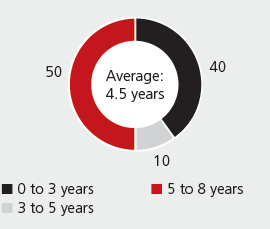 |
GENDER 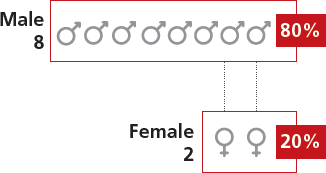 EXPERIENCE
Please note that some Board members have skills and expertise in more than one area |
||
INDEPENDENCE 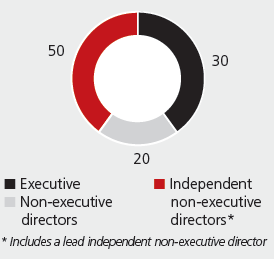 |
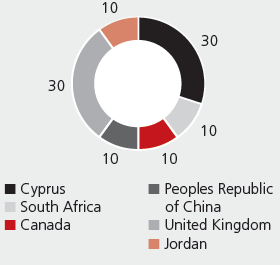
NATIONALITIES |
Role and responsibilities of the Board
The Board is the ultimate governing authority, responsible for the Company's strategy, key policies, ethics and corporate governance, as well as approving the Company's financial objectives and targets. The Board recognises that strategy, performance, risk and sustainability are inseparable and that the execution of strategy can have a material impact on the Company's creation of value and its various stakeholders. The Board is fundamentally important to the achievement of the Company's mission, financial objectives and fulfilment of its corporate responsibilities in a sustainable manner and provides effective leadership on an ethical foundation.
The Board is the ultimate custodian of the governance framework, which commits the Company and its representatives to act according to the highest standards of fairness, accountability, responsibility, transparency, ethics and sustainability. The Company's approach to corporate governance strives to be stakeholder inclusive, based on good communication, and is integrated into every aspect of the Company's business.
The Board ensures that the Group is, and is seen to be, a responsible corporate citizen, by having regard not only to the financial aspects of the business of the Group, but also the impact that the business operations have on the environment and the society in which it operates.
The Board has adopted a Board Charter setting out the role, functions, obligations, rights, responsibilities and powers of the Board and the policies and practices of the Board in respect of its duties, functions and responsibilities. The Board has also adopted terms of reference for each of its committees. The Board Charter and terms of reference are available on the Company's website.
The directors who are also members of the Executive Committee of the Company are involved in the day-to-day business activities of the Company and are responsible for ensuring that the decisions of the Executive Committee as approved by the Board, are implemented in accordance with the mandate given by the Board and Executive Committee.
All non-executive directors have unrestricted access to the Chairman, management, the Joint Company Secretaries, and the external and internal auditors. Directors are entitled to seek independent professional advice on any matter pertaining to the Company and the Group, at the Company's expense.
The Board considers and satisfies itself, on an annual basis, of the qualifications, experience and arm's length relationship between the Company Secretaries and the Board.
Board meetings are held on a regular basis, at least quarterly, and all directors participate in the key areas of decision-making.
Role of the Executive Chairman
There is a clear distinction between the roles of the Executive Chairman and the Chief Executive Officer. The Executive Chairman is responsible for ensuring the integrity and effectiveness of the Board and its committees, which includes:
- providing overall leadership to the Board, without limiting the principle of collective responsibility for Board decisions
- presiding over meetings of the Board and meetings of shareholders
- acting as facilitator at Board meetings to ensure that no director, or group of directors, dominate the discussion, that sufficient debate takes place, that the opinions of all directors relevant to the subject under discussion are solicited and expressed freely, that conflicts of interests are managed and that Board discussions lead to appropriate decisions
- actively participating in the selection of Board members and overseeing a formal succession plan for the Board and certain senior management appointments
- encouraging collegiality among Board members and management while at the same time maintaining an arm's length relationship
- mentoring to enhance directors' confidence, especially new or inexperienced directors and encouraging them to make an active contribution at meetings.
The Chairman's performance is appraised by the non-executive directors on an annual or such other basis as the Board may determine.
Role of the Chief Executive Officer
The Board's authority conferred on management is delegated through the Chief Executive Officer and the authority and accountability of management is accordingly considered to be the authority and accountability of the Chief Executive Officer.
The Chief Executive Officer provides executive leadership and is accountable to the Board for the implementation of strategies, objectives and decisions within the framework of the delegated authorities, values and policies of the Company, which includes:
- recommending or appointing the executive members and ensuring proper succession planning and performance appraisals
- developing the Company's strategy and vision for Board consideration and approval
- developing and recommending annual business plans and budgets that support the Company's long-term strategy to the Board
- monitoring and reporting to the Board on performance against and
- conforming with strategic imperatives
- ensuring that the Company has appropriate management structures and a management team to effectively carry out the Company's objectives, strategy and business plans
- ensuring that the assets of the Company are properly maintained and safeguarded and not unnecessarily placed at risk
- setting the tone from the top in providing ethical leadership and creating an ethical environment and not causing or permitting any decision, internal or external practice or activity by the Company that may be contrary to commonly accepted business practice, good corporate governance or professional ethics
- acting as the chief spokesperson of the Company.
The non-executive directors monitor and evaluate the Chief Executive Officer in achieving the approved targets and objectives and the results of such evaluation are considered by the Remuneration Committee to guide it in its appraisal of the performance and remuneration of the Chief Executive Officer.
Role of the lead independent director
The lead independent director chairs the Nomination Committee, Safety, Health and Environment Committee and Social and Ethics Committee, facilitates meetings of the non-executive directors and is a member of the Audit, Remuneration, Risk and New Business Committees. He acts as a sounding board to the Executive Chairman and the Chief Executive Officer and leads the non-executive directors in the appraisal of the Executive Chairman and Chief Executive Officer. He provides leadership and advice to the Board when the Executive Chairman has a conflict of interest, without detracting from the authority of the Executive Chairman.
He acts as an intermediary for the other Board members and shareholders with regard to concerns that have not been resolved through the normal channels.
Role of the non-executive directors
The non-executive directors bring diverse experience and expertise to the Board. They are required to have a clear understanding of the Group's strategy and must be sufficiently familiar with the Group's businesses to be effective contributors to the development of the Group's strategy and identification and monitoring of risks faced by the Group. Non-executive directors are required to have sufficient time to perform their duties as directors and to make a meaningful contribution. They should be prepared to question and challenge the opinions of executive directors and provide fresh insight into the Group's strategic direction. Non-executive directors assess the performance of the Executive Chairman and Chief Executive Officer and serve on various Board committees. Non-executive directors meet without the presence of the executive directors at least twice a year.
Board appointments
Members of the Board are appointed by the Company's shareholders. The Board also has the power to appoint directors, subject to such appointments being approved by shareholders at the next annual general meeting ('AGM') following such appointment. Pursuant to the terms of the Board Charter, appointments to the Board are made on recommendation of the Nomination Committee. A formal policy detailing the procedures for appointments to the Board has been adopted by the Company.
Non-executive directors are required to be individuals of calibre and credibility, be independent of management and possess the necessary skills and expertise to bring judgement to bear on issues of strategy, performance, resources, diversity, standards of conduct and evaluation of performance.
Directors are required to conduct themselves, at all times, in a professional manner, having due regard to their fiduciary duties and responsibilities to the Company and to ensure that sufficient time is made available to devote to their duties as Board members. Directors are further required to be diligent in discharging their duties to the Company, seek to acquire sufficient knowledge of the business of the Company and endeavour to keep abreast of changes and trends in the business environment and markets in which the Company operates, in order to be able to provide meaningful direction to the Company's business activities and operations.
Director induction
Upon appointment, all new directors are provided with induction materials to familiarise them with the Group's operations, business environment, executive management and to induct them in their fiduciary duties and responsibilities. The induction programme would typically involve an information pack comprising, inter alia, the Group structure, a list of the top shareholders, Board packs and minutes of previous Board meetings, annual and interim reports, Articles of Association, the Board Charter, committee terms of reference, information on directors and officers' insurance, a guide to the JSE Listings Requirements and a memorandum on dealings in securities, market abuse and insider trading. Periodic site visits are arranged for existing and new non-executive directors to improve their understanding of the Group's operations.
Retirement by rotation and re-election of directors
In accordance with the Company's Articles of Association, one-third of non-executive directors must retire from office at each AGM. The non-executive directors retiring at each AGM will be those directors who have been the longest serving since their last election. Retiring directors are eligible for re-election, and if so re-elected, are deemed to not have vacated their office. Executive directors are not subject to retirement by rotation. Accordingly, David Salter and Antonios Djakouris will be retiring by rotation at the upcoming AGM, and being eligible, will be available for re-election.
In terms of the Company's Articles of Association, any directors appointed by the Board during the course of the financial year, shall hold office only until the next AGM of the Company following their appointment and shall then retire and be eligible for election. Having been appointed during the financial year under review, Zhong Liang Hong has made himself available for election. A brief curriculum vitae of each director standing for election or re-election appears on Board of directors.
Board support for election or re-election is not automatic. The Nomination Committee assesses the composition of the Board and performance of individual Board members on an annual basis prior to recommending any directors for election or re-election by shareholders at the AGM. Upon recommendation by the Nomination Committee, the Board makes a determination as to whether it will endorse a director standing for election or re-election. Having assessed the performance of the directors standing for election, it is the recommendation of the Board that Zhong Liang Hong be elected, and David Salter and Antonios Djakouris re-elected.
Board meetings
The Board meets at least four times per year and at such other times as may be required. The Board met four times during the year under review.
Board committees
Certain responsibilities are reserved for the Board, while others are delegated to Board committees, each with formal mandates and terms of reference, without reducing the individual and collective responsibilities of Board members' overall fiduciary duties and responsibilities. The terms of reference of each Board committee determines, inter alia, the composition, purpose, scope of mandate, and powers and duties of the committee. Board committees provide feedback to the Board through reports by their respective chairmen and provide the Board with copies of minutes of committee meetings. All directors are welcome to join meetings of Board committees they are not members of. Terms of reference of the various committees are compliant with the provisions of the Company's Articles of Association and the JSE Listings Requirements. The terms of reference are reviewed on a regular basis and are available on the Company's website. All committees have satisfied their responsibilities in compliance with their respective terms of reference during the year under review.
The Company's Board committees are constituted as follows:
| Chairman | Members | By invitation | |
| Audit Committee | Antonios Djakouris | David Salter Omar Kamal Carol Bell |
CFO CEO |
| Risk Committee | Antonios Djakouris | Loucas Pouroulis Phoevos Pouroulis Michael Jones David Salter Omar Kamal Carol Bell Joanna Cheng Roger Davey Zhong Liang Hong |
COO Group Executive: Legal |
| Nomination Committee | David Salter | Loucas Pouroulis Antonios Djakouris |
CEO |
| Remuneration Committee | Antonios Djakouris | David Salter Carol Bell Roger Davey |
CEO CFO |
| Safety, Health and Environment Committee | David Salter | Antonios Djakouris Carol Bell Roger Davey |
CEO COO |
| Social and Ethics Committee | David Salter | Antonios Djakouris Omar Kamal Carol Bell Phoevos Pouroulis |
|
| New Business Committee | Roger Davey | David Salter Carol Bell Loucas Pouroulis Phoevos Pouroulis |
CFO COO |
Audit Committee
The Audit Committee, which must comprise at least three independent non-executive directors, is chaired by Antonios Djakouris, an independent non-executive director. Other members of the Audit Committee are David Salter, Omar Kamal and Carol Bell, all independent non-executive directors. The Board is satisfied that the members of the committee have the appropriate mix of qualifications and experience in order to fulfil their responsibilities appropriately. The Group's independent external auditor, independent internal auditors, Chief Finance Officer and Chief Executive Officer attend Committee meetings by invitation. The Audit Committee meets with the internal and external auditor, without any executive directors being present.
Both the internal and external auditors have unrestricted access to the Chairman of the Committee and to the Chairman of the Board.
The Audit Committee provides the Board with additional assurance regarding the quality and reliability of financial information used by the Board and the financial statements of the Group. The committee reviews the internal and financial control systems, accounting systems and reporting and internal audit functions. It liaises with the Group's external auditor and monitors compliance with legal requirements.
Furthermore, the Audit Committee assesses the performance of financial management, approves external audit fees and budgets, monitors non-audit services provided by the external auditor against an approved policy and ensures that management addresses any identified internal control weakness. In addition, the Audit Committee oversees the integrated reporting process, risk management systems, information technology risks (as they relate to financial reporting), the Group's whistleblowing arrangements and policies and procedures for preventing corrupt behaviour and detecting fraud and bribery.
The committee has unrestricted access to all Company and Group information and may seek information from any employee. The committee may also consult external professional advisers in executing its duties.
The Chairman of the Audit Committee is required to report to the Board after each meeting of the Committee and the minutes of meetings of the Audit Committee are provided to the Board.
For more information on the activities of the committee during the year under review, refer to the Report of the Audit Committee.
The Audit Committee is satisfied as to the appropriateness of the expertise of Michael Jones, the Chief Finance Officer. The appropriateness of the expertise and experience of the Chief Finance Officer is considered on an annual basis.
The Audit Committee meets as often as is deemed necessary, but is required to meet at least twice a year. The committee met six times during the year under review.
Risk Committee
Control of the complete process of risk management, the evaluation of its effectiveness and approval of recommended risk management and internal control strategies, systems and procedures are key Board responsibilities. For this reason, the Risk Committee comprises the entire Board and is chaired by Antonios Djakouris.
The Risk Committee reviews management reports on the adequacy and effectiveness of the Group's operational risk management functions, ensures compliance with the Group's risk management policies and reviews the adequacy of the Group's insurance coverage.
During the year under review, the committee conducted a high-level review of the residual risks identified by management following a facilitated risk assessment workshop and subsequent business risk reviews undertaken at operating subsidiary level. It continues to monitor progress made by risk owners in identifying mitigating factors, performing gap analyses and implementing additional mitigating measures where required. In addition, the Risk Committee identifies reviews and evaluates non-operational and strategic risks impacting on the Company and the Group on an ongoing basis. The Risk Committee meets as often as is deemed necessary and met twice during the year under review.
Nomination Committee
The Nomination Committee is chaired by David Salter, the lead independent director. Other members of the Nomination Committee are Antonios Djakouris, an independent non-executive director, and Loucas Pouroulis, the Executive Chairman. Loucas Pouroulis is entitled to participate and contribute to the Nomination Committee, but is not entitled to vote on any matter before the Nomination Committee. In the event of a tied vote, David Salter has a casting vote. The Chief Executive Officer, Phoevos Pouroulis, attends meetings by invitation, if required.
The Nomination Committee ensures that the procedures for appointments to the Board are formal and transparent by making recommendations to the Board on all new Board appointments in accordance with the Company's policy for Board appointments. It does so by regularly evaluating the Board performance, undertaking performance appraisals of the Chairman and directors, evaluating the effectiveness of Board committees and making recommendations to the Board. The Nomination Committee also considers and approves the Board succession plans.
The work of the Nomination Committee during the year followed both its terms of reference and established good practice in corporate governance. The committee conducted a review of the structure, size and composition of the Board, with specific emphasis on skills, knowledge, independence and diversity of the Board members. The Nomination Committee recommended the appointment of Zhong Liang Hong to the Board.
The committee also considered the independence of non-executive directors. Consideration was given, among others, as to whether the individual non-executive directors are sufficiently independent of the Company so as to effectively carry out their responsibilities as directors, whether they are independent in judgement and character and that there are no conflicts of interest in the form of contracts, relationships, shareholding, remuneration, employment or related-party disclosures that could affect their independence.
The committee determined that David Salter, Antonios Djakouris, Omar Kamal, Carol Bell and Roger Davey are independent. Joanna Cheng and Zhong Liang Hong are not considered independent due to their association with significant shareholders.
The Nomination Committee met twice during the year under review.
Remuneration Committee
All members of the Remuneration Committee are independent non-executive directors. The committee is chaired by Antonios Djakouris and other members of the committee are David Salter, Carol Bell and Roger Davey. The Chief Executive Officer and Chief Finance Officer are invited to attend meetings of the committee to make presentations, except when their own remuneration is under consideration.
The Remuneration Committee considers the remuneration framework of the Executive Chairman, Chief Executive Officer, Chief Finance Officer and other members of the executive management of the Company and its subsidiaries, with reference to local and international benchmarks.
The committee also considers bonuses, which are discretionary and based upon general economic variables, the performance of the Company and each individual's performance against personalised key performance indicators, allocations in terms of the Group's incentive schemes and certain other employee benefits and schemes.
During the year, the committee reviewed various aspects of the Group's remuneration structure, including executive salaries, performance-based remuneration schemes and the Share Award Plan. The committee is satisfied with the prevailing policies, remuneration and structure.
The committee met three times during the year under review.
The remuneration report may be found here of this Annual Report.
Safety, Health and Environment Committee
All members of the committee are independent non-executive directors. The committee is chaired by David Salter and other members are Antonios Djakouris, Carol Bell and Roger Davey. The Chief Executive Officer and Chief Operating Officer attend the meeting by invitation.
The Safety, Health and Environment Committee develops and reviews the Group's framework, policies and guidelines on safety, health and environmental management, monitors key indicators on accidents and incidents and considers developments in relevant safety, health and environmental practices and regulations.
The committee met four times during the year under review.
Social and Ethics Committee
As required by the JSE Listings Requirements, the Board established a Social and Ethics Committee. The committee is chaired by David Salter and other members are Antonios Djakouris, Omar Kamal, Carol Bell and Phoevos Pouroulis.
The committee's objective is, inter alia, to assist the Board in ensuring that the Company and the other entities in the Group are and remain committed, socially responsible corporate citizens by creating a sustainable business and having regard to the Company's economic, social and environmental impact on the communities in which it operates, which among others, include public safety, HIV/Aids, environmental management, corporate social investment, consumer relationships, labour and employment, the promotion of equality and ethics management.
The committee has an independent role with accountability to both the Board and the Company's shareholders. The committee does not assume the functions of management of the Company. These functions remain the responsibility of the Company's executive directors, executive management and senior managers.
It is the committee's responsibility to monitor the Group's activities, having regard to any relevant legislation, other legal requirements or prevailing codes of best practice, with regard to matters relating to, among others, the following:
- Social and economic development, focusing on:
- the Company's standing in terms of the goals and purposes of the 10 United Nations Global Compact Principles, among others:
- upholding and respecting human rights
- fair labour practices, which include the freedom of association, right to collective bargaining and the elimination of forced labour, child labour and discrimination
- promotion of greater responsibility toward the environment
- prevention of bribery and corruption
- the Organisation for Economic Co-operation and Development's recommendations regarding corruption
- the Equator Principles
- the Employment Equity Act and the Broad-Based Black Economic Empowerment Act, applicable to South African subsidiaries.
- the Company's standing in terms of the goals and purposes of the 10 United Nations Global Compact Principles, among others:
- Good corporate citizenship and the impact of the Group's activities and of its products or services on the environment, health and public safety and the Company's employment relationships and its contribution toward the educational development of its employees. In order to ensure that Tharisa is seen to be a responsible corporate citizen, the committee oversees and monitors, on an ongoing basis, the consequences of the Group's activities and outputs on:
- the workplace, by ensuring employment equity, fair remuneration, safety, health, dignity and development of employees and the Group's standing in relation to the International Labour Organisation Protocol on decent work and working conditions
- the economy, by working towards economic transformation
- the prevention, detection and response to fraud and corruption
- society, by upholding public health and safety, consumer protection, community development and protection of human rights
- the environment, by ensuring the prevention of pollution, minimising waste disposal and protecting biodiversity.
- Ethical leadership and ethical behaviour, by reviewing the Company's Code of Ethics and making recommendations to the Board for approval, reviewing results of whistleblowing activities, reviewing significant cases of employee conflicts of interest, misconduct or fraud, or any other unethical activity by employees or the Company and ensuring that the Company's ethics performance is assessed, monitored, reported and disclosed.
The committee meets as often as it deems necessary but in any case at least once a year and at such other times as determined. The committee met once during the year under review.
New Business Committee
The New Business Committee is responsible for the investigation and assessment of new projects and business opportunities, particularly from a strategic, technical and operational point of view, and the identification of project-related risks, and safety, health and environmental risks. The committee is not authorised to approve individual projects or investments or commit the Company, but works with executive management to review and evaluate new business opportunities and initiatives and make recommendations to the Board for approval. The committee has the right of access to management and/or external consultants and the right to seek additional information or explanations.
The committee is chaired by Roger Davey and other members are David Salter, Carol Bell, Loucas Pouroulis and Phoevos Pouroulis. Michael Jones attends meetings as a permanent invitee.
Meetings of the committee will be held as often as necessary to undertake its role effectively. The committee met four times during the year under review.
Attendance at meetings
Attendance at Board and committee meetings is set out below:
| Director | Board | Audit Committee |
Nomination Committee |
Remuneration Committee |
Risk Committee |
SHE Committee |
Social and Ethics Committee |
New Business Committee |
| Number of meetings held | 4 | 6 | 2 | 3 | 2 | 4 | 1 | 4 |
| Loucas Pouroulis | 4 | — | 1 | — | 2 | — | — | 4 |
| Phoevos Pouroulis | 4 | 6# | — | 3# | 2 | 4# | — | 4 |
| Michael Jones | 4 | 6# | — | 3# | 2 | — | — | 4# |
| David Salter | 4 | 6 | 2 | 3 | 2 | 4 | 1 | 4 |
| Antonios Djakouris | 4 | 6 | 2 | 3 | 2 | 4 | 1 | 3# |
| Omar Kamal | 4 | 6 | — | — | 2 | 1# | 1 | 2# |
| Carol Bell | 4 | 6 | 1# | 2 | 2 | 2 | 1 | 4 |
| Joanna Cheng | 4 | — | — | — | 2 | — | — | 1# |
| Roger Davey | 4 | 1# | 2# | 3 | 2 | 4 | — | 4 |
| Zhong Liang Hong* | 2 | — | — | — | 1 | — | — | — |
* Appointed 1 April 2018
# By invitation
Joint Group Company Secretaries
The role of the Joint Group Company Secretaries is, inter alia, to provide guidance and advice to the Board with respect to matters relating to the JSE Listings Requirements, the LSE Listings Rules, Disclosure and Transparency Rules, Cyprus Companies Law, King IV, market abuse laws and regulations and other corporate governance-related matters. In addition to their statutory duties, the Company Secretaries provide individual directors, the Board as a whole, and the various committees with guidance as to the manner in which their responsibilities should be discharged in the best interests of the Group.
The appointment and removal of the Company Secretaries are matters reserved for the Board as a whole.
Sanet Findlay is a full-time employee within the Group and based in South Africa. She holds a Bachelor of Science and a Bachelor of Law, a CIS professional post-graduate qualification: Company Secretarial and Governance Practice and is an Associate member of the Chartered Secretaries Southern Africa (2003). She has experience as a Group Company Secretary of JSE and LSE listed companies since 2009. She is not a director of Tharisa or any of its subsidiaries and maintains an arm's length relationship with the Board.
Lysandros Lysandrides holds a Bachelor of Laws and a post-graduate diploma in Legal Practice (UK). He is an associate member of the Institute of Chartered Secretaries and Administrators (UK), a Fellow of the Chartered Institute of Legal Executives (UK) and a registered practising Cyprus attorney at law. He has experience as Company Secretary and legal adviser to companies listed on the LSE and CSE. Lysandros is appointed as an external adviser to Tharisa and its Cyprus subsidiaries and maintains an arm's length relationship with the Board.
The Board formally assessed and considered the performance and qualifications of the Company Secretaries and is satisfied that the Company Secretaries are competent, suitably qualified and experienced.
Board evaluation
The Nomination Committee, under leadership of the lead independent director, conducts an evaluation of the performance of the Board, its committees, the Executive Chairman, Chief Executive Officer, Chief Finance Officer, the Joint Company Secretaries and the performance and contribution of the individual non-executive directors. The Board committees conduct a self-evaluation against their respective terms of reference and each individual Board member is evaluated by fellow Board members using an evaluation questionnaire. The results of the evaluation process are considered by the Nomination Committee prior to their presentation to the Board. Results and any identified training requirements are discussed with individual directors if deemed necessary. Board evaluations are performed on an annual or bi-annual basis. An extensive evaluation was conducted during the year.
Conflicts of interest
Disclosure of other directorships, personal financial interests and any other conflicts of interest, and those of related persons, in any matter before the Board is a standing Board agenda item and a register is kept of all such disclosures. Directors recuse themselves from discussion on any matters in which they may have a conflict of interest. Non-executive directors are required to inform the Board of any proposed new directorships and the Board reserves the right to review such additional appointments to ensure that no conflict of interest would arise and to ensure that a director accepting a new appointment would be able to continue to fulfil his or her obligations as a member of the Board.
Share dealing and insider trading
All directors of the Company and its major subsidiaries, senior executives, the Joint Company Secretaries and employees who, by virtue of their positions have access to financial and other price sensitive information, are regarded as insiders and are required, at all times, to obtain prior authorisation to deal in the Company's shares.
Directors of the Company and its major subsidiaries and senior executives are reminded of their obligation to inform all their associates, as defined by the JSE Listings Requirements, and investment managers of the fact that dealings by the directors and their associates in Tharisa shares have to be preapproved and/or disclosed to the Company within the stipulated timeframe to facilitate release of the required announcements in terms of the JSE Listings Requirements. A similar requirement exists under the European Union's Market Abuse Regulations for persons discharging managerial responsibilities and persons closely associated with them.
The Company's directors, executives and employees who are classified as insiders are not permitted to deal in the Company's shares during closed periods or when they are in possession of non-public information.
An appropriate communication is sent to all such employees alerting them that the Company is entering a closed period. Closed periods are observed as required by the JSE Listings Requirements, including the period from the end of the interim and annual financial reporting periods to the announcement of the financial results for the respective periods, and during periods that the Company is under a cautionary announcement. The EU Market Abuse Regulation stipulates for a closed period of 30 calendar days before announcement of the interim and/or annual results. The Company applies the longer duration in any given financial reporting period.
Succession planning
The Board, assisted by the Nomination Committee, is responsible for overseeing succession planning and ensuring that appropriate strategies are in place to ensure the smooth continuation of roles and responsibilities of members of the Board and senior management.
Compliance
Compliance with financial reporting requirements and accounting standards falls within the ambit of the Audit Committee. The Group's statutory and regulatory compliance resides with the Legal, Risk and Compliance Officer and reports on compliance are presented to the Audit and Social and Ethics Committees. In addition to the formal authorisation processes required for dealings in the Company's shares, the Group has various policies and procedures in place governing the declaration of interests, accepting and granting of gifts and an approved delegation of authorities matrix which governs the delegation of authority and value limits within the Group and ensures that all transactions are approved appropriately.
No incidents of non-compliance were identified and no significant penalties or regulatory censures were imposed on the Company or any of its subsidiaries during the year under review.
The Board is satisfied that the Company complied with the requirements of the JSE Listings Requirements pursuant to the Company's primary listing on the JSE during the year under review. The Board also acknowledges the role and responsibilities of its JSE sponsor, Investec Bank Limited, and is of the opinion that the sponsor has discharged its responsibilities with due care during the period.
Information technology governance
The Board Charter commits the Board to assuming ultimate responsibility for ensuring that effective information technology ('IT') systems, internal control, auditing and compliance policies, procedures and processes are implemented in order to avoid or mitigate key IT-related business risks. The Board has delegated responsibility for the governing of IT to the Audit Committee. Assurance on the IT systems and processes is provided by the Group's internal auditors and findings are reported to the Audit Committee, which ensures that any and all material findings are addressed appropriately.
External audit
Ernst & Young Cyprus Limited acts as external auditor to the Group and its independence is reviewed by the Audit Committee on an annual basis. The appointment of the external auditor was approved at the AGM on 10 January 2018. The external auditor has unrestricted access to the Chairman of the Audit Committee.
Internal audit
The Company does not have an in-house independent internal audit function.
The Audit Committee reviews, on a regular basis, whether there is a need for an in-house internal audit function and makes the necessary recommendation to the Board. The Audit Committee is of the opinion that given the size and stage of development of the Company and the Group, an in-house internal audit function is not currently justified. The appointment of Deloitte as internal auditor for the Group is considered to sufficiently mitigate the risk of not having an in-house internal audit function.
Internal control systems
To meet the Company's responsibility to provide reliable financial information, the Company maintains financial and operational systems of internal control. These controls are designed to provide reasonable assurance that transactions are concluded in accordance with management's authority, that the assets are adequately protected against material losses, unauthorised acquisition, use or disposal and that transaction are properly authorised and recorded.
The systems include a documented organisational structure and division of responsibility, established policies and procedures, which are communicated throughout the Group, and the careful selection, training and development of people.
The Audit Committee monitors the operation of the internal control systems to determine whether there are deficiencies. Corrective actions are taken to address control deficiencies as they are identified. The Board, operating through the Audit Committee, oversees the financial reporting process and internal control systems.
There are inherent limitations to the effectiveness of any system of internal control, including the possibility of human error and the circumvention or overriding of controls.
Code of Business Ethics and Conduct
The Group's Code of Business Ethics and Conduct reaffirms the high standards of business conduct required of all employees, officers and directors of Tharisa. It forms part of the Company's continuing effort to ensure that it complies with all applicable laws, to ensure that it has an effective programme to prevent and detect violations of law, and for the education and training of employees, officers and directors. In most circumstances, the code sets standards that are higher than the law requires and adherence to the code aims to preserve the confidence and support of the public and Tharisa's shareholders.
Tharisa expects its employees, officers and directors to:
- act with honesty, integrity and fairness in all dealings, both internally and externally
- comply with all laws and regulations applicable to the Group
- comply with Group policies and procedures
- protect the health, safety and wellbeing of co-workers, suppliers and the communities in which the Group operates
- protect the environment by prudent use of resources such as water and energy and to limit waste disposal by recycling
- protect and not disclose Tharisa's confidential information
- avoid any potential conflicts of private interests with the interests of the Group, including but not limited to improper communications with competitors or suppliers regarding bids for contracts, having close relationships with contractors or suppliers, involvement with any other businesses that have interests adverse to Tharisa, interests in Tharisa or compete with Tharisa
- not give or accept gifts, gratuities, or hospitality from customers or suppliers of inappropriate value, that could incur obligations or that could influence judgement
- avoid any situations or relationships that could interfere with an individual's ability to make decisions in Tharisa's best interests
- to act in a courteous, dignified and respectful manner when dealing with co-workers and third parties and to refrain from discriminatory, harassing or bullying behaviour, whether expressed verbally, in gesture or through behaviour.
Furthermore, it is Tharisa's policy not to discriminate against any employee on the basis of race, religion, national origin, language, gender, sexual orientation, HIV status, age, political affiliation or physical or other disability. Tharisa desires to create a challenging and supportive environment where individual contributions and teamwork are highly valued. In order to establish such an environment, all individuals are expected to support this policy of non-discrimination and the equal employment opportunity policies.
Modern slavery and human trafficking
Tharisa has a zero tolerance approach to any form of modern slavery and is committed to ensuring that there is no slavery or human trafficking in its supply chain or in any part of its business. Modern slavery encapsulates slavery, servitude and forced or compulsory labour. Tharisa acts ethically and with integrity in all business dealings and has the necessary systems and controls in place to safeguard against any form of transgression of human rights. Tharisa will continue to raise awareness of human rights among its employees, suppliers and the communities in which it operates.
Anti-bribery and corruption policy
Tharisa is committed to doing business ethically. Tharisa does not tolerate corruption, fraud and bribery and does not allow donations to any political parties by any of its operations. The Group's anti-corruption policy is built into its Code of Business Ethics and Conduct and outlines potential risks, steps to mitigate the risk of bribery and corruption, together with a reporting guideline. All employees, suppliers and other associated persons are made aware of these policies and procedures with regard to ethical behaviour, business conduct and transparency.
Independent anonymous safety and ethics hotline
The Group has a zero tolerance approach to safety transgressions, theft, fraud, corruption, violation of the law and unethical business practices by employees or suppliers.
A 24-hour independent anonymous safety and ethics hotline monitored by an independent external party is fully operational and facilitates the reporting and resolution of safety and ethical violations. This confidential and anonymous hotline provides an impartial facility for employees, service providers, customers and other stakeholders to report any safety or ethics-related matter such as safety concerns, unsafe behaviour and practices, hazardous conditions, fraudulent activity, corruption, statutory malpractice, financial and accounting reporting irregularities and other deviations from safe and ethical behaviour. It is the duty of the Audit Committee to ensure that arrangements are in place for the independent investigation of such matters and appropriate follow-up action. No action will be taken against anyone reporting legitimate concerns, even if there is no proven unlawful conduct.
Investor relations
The Chief Executive Officer and Chief Finance Officer, supported by the Investor Relations function, interact with institutional investors on a regular basis on the performance of the Group through presentations and scheduled meetings. The Company also participates in selected international conferences and conducts roadshows internationally.
A wide range of information and documents, including copies of presentations given to investors, Annual Reports and notices of shareholder meetings, are made available on the Company's website www.tharisa.com on an ongoing basis.
Shareholders are encouraged to visit the investors' section of the website frequently to be kept informed of the corporate timetable, including dates for the AGMs, forms of proxy and relevant shareholder information relating thereto.