Environment
Mining by its very nature has an impact on the environment. Tharisa aims to manage and mitigate its impacts in an environmentally responsible manner and to ensure the wellbeing of all stakeholders. Growing regulatory and social pressures, increasing demands for limited and threatened natural resources, and the changing costs of energy and water all highlight the business imperative of responsible environmental management.
Environmental management involves taking measures not only to address security of resource supply (through efficiency and recycling), but also to actively minimise the Group's impacts on natural resources and on the communities around its operations. Taking such measures has direct benefits in terms of reduced costs and liabilities, enhanced resource security and improved security of its licence to operate.
Tharisa Minerals' Environmental Management Programme ('EMP') aims to minimise its impact on the natural environment and reduce its consumption of scarce natural resources. Tharisa believes that its commitment to responsible mining and beneficiation helps it achieve its strategic goals and also establishes a sustainable competitive advantage.
A precautionary approach is exercised in all processes and this includes the exploration, planning, licensing, construction, operation, closure and rehabilitation stages of all operations and projects.
Tharisa Minerals has the relevant and applicable environmental authorisations required for its licence to operate, including an approved Environmental Management Programme Report ('EMPR') in terms of Mineral and Petroleum Resources Development Act (No. 28 of 2002) ('MPRDA'), a positive Record of Decisions in terms of National Environmental Management Act (No. 107 of 1998) ('NEMA') and an Integrated Water Use Licence ('IWUL') under the National Water Act (No. 36 of 1998) ('NWA').
Tharisa's material environmental matters are:
- resource management, particularly energy use and water availability
- land management, including biodiversity conservation, rehabilitation and closure planning
- environmental compliance - ensuring that operations remain legally compliant with new and changing legislation
- managing and minimising waste streams
- implementation of the new regulations on financial provision for rehabilitation - ensuring compliance and appropriate funding mechanisms to provide adequately for concurrent rehabilitation, as well as rehabilitation at mine closure and post-closure stages, to be implemented by February 2020
- climate change and the effects thereof.
Water management remains a key challenge for Tharisa Minerals' operations. While water scarcity is not currently a challenge, it does pose a potential constraint on current production and future expansion, and water availability is a concern for local communities. The reliability of current water infrastructure and the long lead time in rolling out new infrastructure is a risk for current operations and future expansion plans. Tharisa Minerals is also dependent on a reliable and sufficient supply of energy. Interruptions to energy supply have the potential to affect production efficiencies and can impact the safety of workers.
The potential reputational and financial implications of non-compliance with the rapidly evolving environmental regulatory framework are significant as are the direct and indirect costs of ensuring compliance. Proposed legal developments, among others, that are likely to have a significant impact on the business include the Carbon Tax Bill, the Greenhouse Gas Reporting Regulations, company level carbon budgets and the revised financial provisions for rehabilitation and closure.
Climate change is recognised in the mining industry as one of the most material issues that can have potential impacts on its ability to achieve its milestones through its effect on energy prices, access to natural resources, weather-related production disruptions and related impacts on its value chain.
The Board ultimately holds responsibility for sustainable development and delegates the monitoring of this area to the SHE committees at both the Tharisa Group and the Tharisa Minerals Board level. The Environmental Coordinator, together with the SHE Manager, is responsible for managing and reporting on environmental performance, impacts and mitigation, as well as ensuring that all operations are legally compliant with the applicable environmental legislation and associated regulations. This is further driven through the functional reporting structure where the SHE Manager reports to the Head: Sustainable Development, who has a direct reporting line to the Technical Director of Tharisa Minerals and the Group Chief Operating Officer. The SHE policy is reviewed annually, and was revised and signed off by the Technical Director and union representatives in September 2018. The policy is being effectively implemented at mine level. Employees and contractors receive environmental training at their initial induction and through regular refresher courses and job-specific training.
Tharisa Minerals monitors its environmental compliance on an ongoing basis, including the status of its EMPR, IWUL and environmental impact assessments ('EIAs'). In addition to internal operational compliance monitoring, external environmental compliance audits are conducted biennially (or as specified in the respective environmental authorisations) and as part of the Board's instruction to monitor compliance in areas of safety, occupational health and environmental management.
Environmental expenditure for measuring, monitoring and mitigating risks and impacts represents a sizeable proportion of the operations' operating and capital budgets. In the year under review, ZAR9.0 million was spent on environmental management, including among others, pollution control and prevention and environmental operational expenditure (2017: ZAR5.5 million).
There were no significant fines or non- monetary sanctions for non-compliance with laws and regulations in the year under review.
Water management
Water is used at the Tharisa Minerals operations for milling, beneficiation and for dust suppression during blasting, on haul roads and at ore transfer points. The operations are situated in a water scarce region of the North West province of South Africa, where water conservation is a priority for all the mining houses in the area. The Tharisa Mine has undertaken to educate the community and employees on the importance of conservation as source and security of supply is the mine's prioritised business risk. This is achieved through the use of posters and banners strategically placed inside the mine and in the neighbouring community of Mmaditlhokwa, which has assisted in creating a greater awareness of this invaluable resource.
Water for the Tharisa Mine operation is sourced from boreholes strategically drilled within the Mining Right area, the regional water utility, an allocation from the Buffelspoort Irrigation Scheme and water pumped from the open cast pits during mining.
All water is reused and recycled as far as practically possible to achieve effective and efficient utilisation of water resources based on reducing water demand, reusing process water and preventing any discharges to the environment. Dirty and clean water is separated and Tharisa Minerals implements a hierarchy of water use to ensure that "dirty" or process water is recycled for reuse in the operations before clean water is abstracted from the natural environment.
Water consumption is metered as required by the IWUL and regular reporting of the quality and quantities of the mine's water is submitted quarterly and annually, respectively, to the Department of Water and Sanitation ('DWS').
The drought conditions experienced regionally have impacted the availability of water in surface impoundments at the operations. This has required Tharisa Minerals to be more reliant on groundwater and thus increased its borehole water consumption during the year under review.
Tharisa Minerals has submitted an application to amend its IWUL, which includes both minor amendments to the licence as well as new water uses. The final technical report in support of this amendment application was submitted to DWS in September 2017 and although constant liaison has been maintained with DWS in this regard, the approval thereof is still outstanding. Tharisa Minerals is optimistic that its application will be approved soon.
The Tharisa Mine provides water for the nearby communities by drilling and equipping boreholes to supply water for domestic purposes. The pumped water is then piped and purified using on-site purification systems located in the community.
Water quality is monitored to assess the impact on the receiving environment, to immediately warn management when mitigation action is required and to measure compliance with the IWUL conditions. Ground and surface water levels and quality are monitored regularly by biomonitoring of aquatic/riverine environments as appropriate and as stipulated in the IWUL conditions.
Materials
Measuring explosives used is important, as explosives contribute to greenhouse gas ('GHG') emissions. The following materials were consumed at Tharisa Minerals' operations during the year:
| Consumed materials | FY2018 | FY2017 | ||
|---|---|---|---|---|
| Explosives (t) | 11 878 | 21 740 |
Energy
A consistent supply of electricity is critical for efficient operations. Electricity is sourced from the existing Eskom supply. From the Tharisa Mine's on-site substation, power is distributed throughout the operations. The most significant impact electricity supply interruptions have on operations are on workplace safety, production efficiencies and diesel consumption with resulting emissions when generators are used to supply electricity to critical functions.
Tharisa Minerals' direct and indirect energy consumption has been calculated as part of its GHG inventory in December 2017. Fuels consumed in operations include diesel, acetylene and liquid petroleum gas ('LPG'). Diesel is the most used fuel at 27.7 million litre in FY2017 and accounts for 99% of carbon emissions from fuel use.
Tharisa Minerals' indirect energy consumption is from grid electricity. For the year under review, Tharisa Minerals used 169 480 MWh of electricity. Managing energy consumption also reduces GHG emissions since electricity for South African operations is generated mainly from fossil fuels and is included in Scope 2 emissions below.
Carbon emissions
The GHG inventory for Tharisa Minerals was calculated for the base year in December 2016. These calculations have been updated for the financial year 2017 and will be used to conduct energy optimisation studies and to set practical energy and emission targets to drive reductions in the operations. These calculations are based on the Greenhouse Gas Protocol - Corporate Standard (GHG Protocol), published by the World Resources Institute and World Business Council for Sustainable Development in March 2004.
GHG emissions are measured and reported in terms of Scope 1, Scope 2 and Scope 3 emissions. Direct GHG emissions (Scope 1) are emissions from sources that are owned or controlled by Tharisa Minerals. These include the emissions generated by the fuels that are purchased and subsequently combusted by the Tharisa Mine. Energy indirect GHG emissions (Scope 2) are from the consumption of grid electricity.
Other indirect GHG emissions (Scope 3) are the emissions (other than energy indirect GHG emissions) that are created as a result of Tharisa Minerals' activities, but occur at sources owned or controlled by another company. These emissions will include the emissions generated by the mining contractors on site, by the combustion of fuels that they purchase (emissions from explosives) and fuel consumption. Other indirect emissions can either occur upstream or downstream of business operations. Upstream emissions are typically related to purchased or acquired goods and services. Downstream indirect GHG emissions are those pertaining to sold goods and services.
The GHG inventory for FY2017 is provided in the infographic below.
The assessment for FY2018 will be conducted in December 2018.
Greenhouse gases are released into the atmosphere through different sources. This is the second GHG inventory calculated by Tharisa Mine. The base year GHG inventory was calculated in FY2016.
Emission sources: FY2017
| DIRECT EMISSIONS | INDIRECT EMISSIONS | ||||||||||||||||
Direct emissions relate to fuel combustion emissions. The direct emissions of Tharisa Mine are relatively small, as most of the fuel purchases are undertaken by contractors Fuel combustion
|
Electricity indirect emissions are related to the electricity consumption at the mine. It is relatively high due to the predominantly coal-fired and emissions intensive electricity grid in South Africa Purchased electricity
|
Indirect emissions relate to emissions upstream and downstream in Tharisa Mine’s value chain. Much of Tharisa’s operations were contracted out and thus most of Tharisa’s emissions are indirect Other indirect emissions
|
|||||||||||||||
|
|
|
|||||||||||||||


Tharisa Minerals' direct (Scope 1) emissions for FY2017 amounted to 2 600 tCO2e. Diesel purchased and consumed directly by the mine decreased by 33% in FY2017 when compared to FY2016.
Energy indirect (Scope 2) emissions amounted to 162 800 tCO2e. Electricity consumption reduced by 40% between FY2016 and FY2017. The emissions from electricity consumption have reduced by 42% due to the change in the grid emission factor between these periods.
Overall, the Tharisa Mine's Scope 3 emissions increased by 6% in FY2017 compared to FY2016 levels due to an increase in the quantity of chrome produced in these respective years. The processing of sold products is the largest contributor to Tharisa Mine's Scope 3 emissions, comprising 88% of Scope 3 emissions.
Air quality
Dust originating from the mining and processing operations is rigorously and continuously monitored, both in terms of occupational health (dust that may contain silica and that is harmful to health) and fall-out dust (particulate matter/fugitive dust). Fugitive dust is monitored at various locations within the operation as well as specific sites in neighbouring areas, to ensure compliance with applicable legislation. A dust suppression spray system reduces fugitive dust levels from the respective crushers, conveyors and transfer points. Dust generated on unpaved roads is suppressed using water bowsers to wet the roads. In addition, Tharisa Minerals applies a dust suppressant on its access roads to further reduce the mine's dependence on water for dust suppression.
Waste management
Tharisa Minerals manages its activities to ensure compliance with the relevant waste legislation and to minimise its impact on the natural environment and surrounding communities. Tharisa Minerals' current activities and infrastructure do not trigger the requirements for a Waste Management Licence ('WML') as stipulated in the National Environmental Management Waste Act ('NEMWA'). However, for the planned expansion projects an application for a WML was submitted in September 2018 to the relevant regulatory authorities for the tyre storage facility, sewage treatment plant and waste rock dump as well as the tailings storage facility.
Domestic waste generated at the operations is disposed of in licensed municipal landfill sites. Hazardous waste such as used oil is recycled through specialist service providers while other hazardous waste such as oil contaminated material and used filters is sent to registered waste disposal facilities and safe disposal certificates are obtained.
Mineral waste produced by the operations includes tailings and waste rock. Waste rock is non-ore bearing rock removed in the mining process and is disposed of on waste rock dumps or used to backfill open pit workings to rehabilitate and minimise aesthetic impact. Tailings generally consist of finely milled waste material suspended in water and are disposed in tailings dams. These dams are lined appropriately to prevent pollution of groundwater. Groundwater around tailings disposal facilities is closely monitored and groundwater modelling assists in predicting the potential impact of tailings disposal on aquifers.
Ongoing monitoring of surface water runoff and groundwater in the vicinity of the infrastructure alerts operations to any negative impact from waste disposal. Tharisa Minerals has the relevant authorisations for the disposal and storage of both tailings and waste rock.
Waste inventories describing the source, volume, and type of waste generated by each process at the operation, as well as the disposal method are being managed and give management a better sense of volumes of waste generated on site to effectively manage the waste generated.
In the next financial year, the focus will be on operational efficiencies, which will include reducing the amount of waste produced as well as recycling wherever possible, including paper, oil and scrap metal.
| Waste produced | FY2018 | |||
|---|---|---|---|---|
| Waste rock | Mm3 | 10.8 | ||
| Tailings | Mm3 | 2.1 | ||
| Domestic waste | t | 525.9 | ||
| Hazardous waste: used oil | kℓ | 82.7 | ||
| Hazardous waste: other | t | 271 |
Biodiversity
Mining has a direct impact on the physical environment and both mining and beneficiation can affect the biomes in their vicinity. Ensuring that the processes and controls are in place to safeguard the biodiversity in the biomes in which Tharisa Minerals operates is an important aspect of its sustainability model. Biodiversity Action Plans ('BAPs') are in place at the operations and were compiled as part of the initial EIA process. Tharisa Minerals is currently implementing the biodiversity management programmes. The BAPs include commitments to conserve protected areas such as wetlands, zones of endemism, archaeological and heritage sites and protected and endangered species.
The EIA and the EMP include land use planning that involves engagements with community forums, local municipalities and other affected stakeholders. Awareness training is planned for employees, contractors and communities regarding sensitive and endangered species around the operation.
The Tharisa Environmental Department organised an environmental education excursion for Retief Primary School, a local school, to visit the Pretoria Botanical Gardens to learn more about South Africa's biodiversity.
Tharisa Minerals – environmental education
Retief Primary School trip to the Pretoria National Botanical Garden
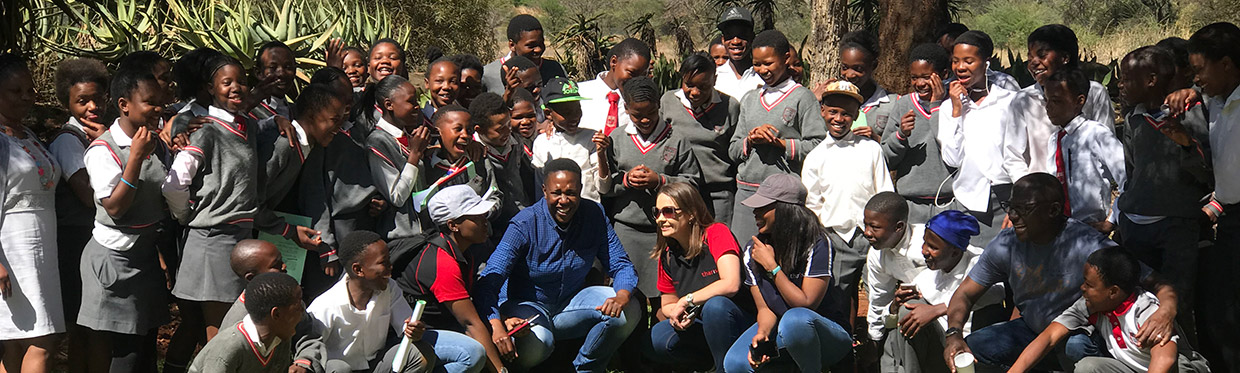
On 13 September 2018, Tharisa Minerals once again organised a trip for 49 learners to the Pretoria Botanical Gardens. This educational trip was designed for the Grade 7 learners from the Retief Primary School, from the local community. Tharisa's Environmental Awareness Campaign in conjunction with South African National Biodiversity Institutes Environmental Education programme was aimed at providing a platform for learners to gain more knowledge on biodiversity, conservation and sustainability. Learners embarked on a tour exposing them to four types of biomes, which included Grassland, Succulent Karoo, Forest and Fynbos. They were educated on the importance of the variety of biomes and the specific climatic conditions for each biome. In addition, learners were taught on the concepts of indigenous, alien and invasive species.
Environmental rehabilitation
Tharisa Minerals considers the impact of its operations on local landscapes at each stage of the mining cycle from initial exploration to construction, operation and eventual decommissioning and closure. Operations rehabilitate concurrently with ongoing mining activities wherever possible.
The cost of rehabilitation and closure is assessed annually by independent specialists in alignment with the requirements of relevant legislation, EMPR closure commitments and applicable good practice. Financial provision is then made in the form of a financial guarantee, which is submitted to the DMR.
The total cumulative mine closure and environmental rehabilitation provision (in terms of the DMR requirements) for FY2018 amounted to US$21.8 million (2017: US$13.7 million).
The regulations in terms of NEMA pertaining to financial provision for rehabilitation and closure for prospecting, exploration, mining or production operations were published in November 2015. These regulations have significant financial implications for the mining industry and the Mineral Council of South Africa is engaging with the DMR around this impact and the industry's concerns.
These regulations require mines to provide for ongoing expenses after mine closure and effectively freeze the existing provisions for rehabilitation and closure, requiring further provisions to be made from operating expenses. Assessments aligned to these regulations need to be completed and submitted to the DMR by February 2020.